

Vault or Ship? Raw vs Graded Exit Strategy on Tilt Rips
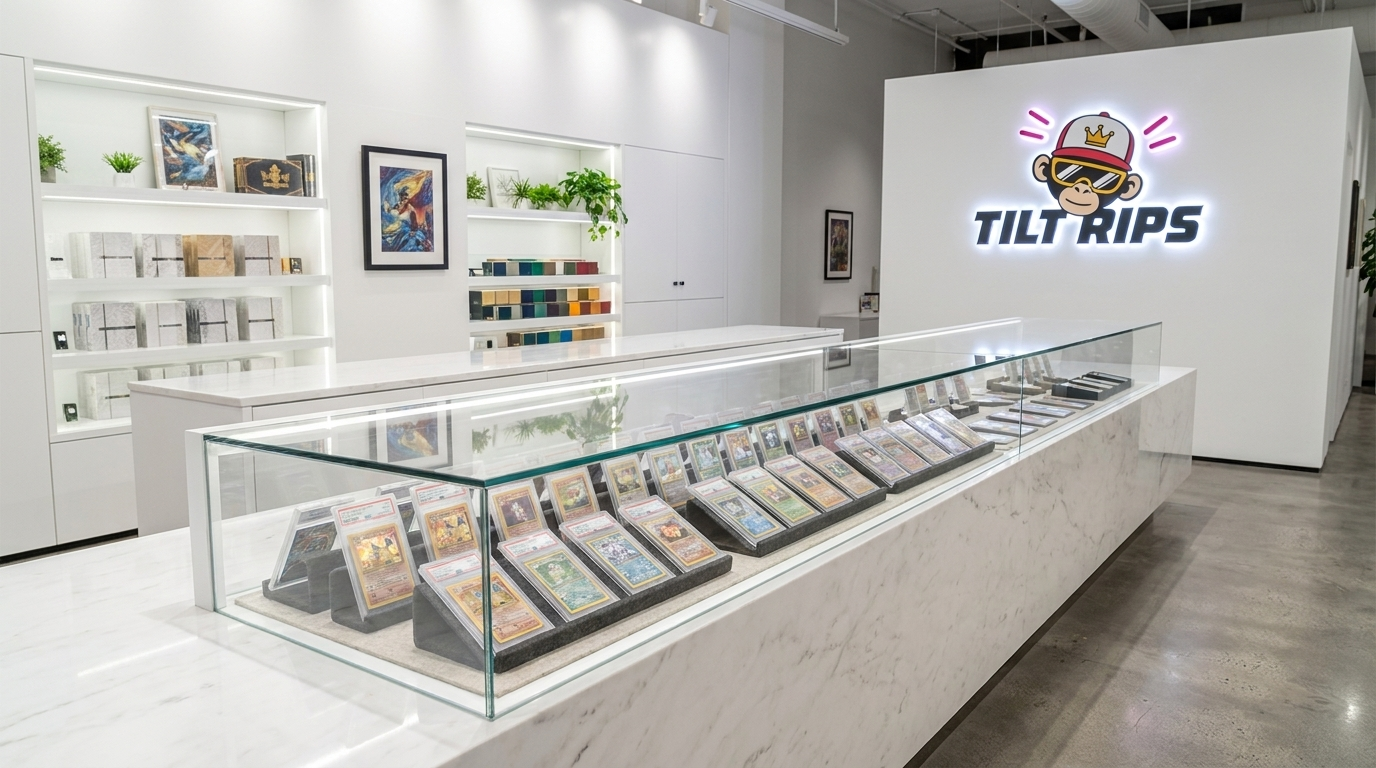
The best exit after a Tilt Rips pull—vault, ship, sell back, or list—depends on whether the card is raw or graded, whether the collector wants liquidity or physical custody, and how live market value compares to personal hold goals.
Every card on Tilt Rips enters vault immediately after the reveal. From there, four paths are always available: sell back at 90% of live market value, list on the marketplace, hold in free vaulting, or redeem and ship. Raw and graded cards follow the same mechanics; the strategy differs by card type and collector intent.
Default decision flow
| If you… | Strong first move |
|---|---|
| Want cash now | Sell back |
| Think comps beat sell-back floor | List on marketplace |
| Need time / building a set | Vault free |
| Want the physical card | Redeem and ship |
Fees on marketplace actions are shown before confirmation in the app. Shipping fees for redemption are shown before confirm; international delivery supported (up to ~6 weeks).
Graded slabs: vault vs ship
Vault graded cards when:
- Price history suggests upside and live market value is still climbing.
- You are one card away from a graded set goal and may buy the missing piece on the marketplace.
- The slab is a flip candidate but not today—you are waiting for a comp spike or event.
- You lack home storage or display space temporarily; vault is free with no storage fees.
Ship graded cards when:
- The pull is a display grail (wall, slab case, personal collection).
- You plan to grade-submit crossovers, crack, or trade in person at shows.
- Ownership matters more than sell-back math.
- You want to remove platform dependency for long-term holds.
Graded inventory on Tilt Rips includes PSA, CGC, and BGS slabs—see PSA vs CGC vs BGS. High-end examples in vault inventory span Mewtwo ☆ PSA 10 through modern PSA 10 ex cards.
Middle path: Vault → watch price history → list or sell back when comps peak. See how Pokémon card prices move on Tilt Rips.
Raw cards: vault vs ship
Vault raw cards when:
- You might submit to PSA/CGC/BGS later and want secure custody until submission.
- The card is trade fodder on-platform—list when the right buyer appears.
- You pulled raw set-fillers and are completing a binder before shipping bulk.
- Sell back at 90% beats the hassle of raw shipping for a mid-tier hit.
Ship raw cards when:
- You are set building physically and want cards in-hand to sort and sleeve.
- The card is low value but sentimental—shipping cost may still be worth it for kids’ collections.
- You run a local shop table or sell raw offline and need inventory in hand.
Raw pulls still show live market value and price history while vaulted—the same data graded cards get.
Graded vs raw: exit comparison
| Factor | Graded (slab) | Raw |
|---|---|---|
| Vault cost on Tilt Rips | Free | Free |
| Typical sell-back use | Fast flip on known comps | Fast exit on mid hits |
| Ship motivation | Display grails, collection | Binder building, offline sale |
| List on marketplace | Strong for chase slabs | Strong for playable / set cards |
| Price tracking | Cert-level comps | Live market data on card |
When sell back beats vault or ship
Sell back immediately when:
- The rip was budget entertainment and any hit funds the next session.
- Live market value already reflects a short-term peak you do not trust.
- You do not collect that era or character and will never ship.
Sell back uses live market data at request time; quotes cannot be disputed—alternatives are vault, list, or ship. Detail: Sell back at 90%.
When listing beats vaulting
List on the marketplace when:
- Peer buyers may pay above the 90% sell-back floor.
- The card is a duplicate graded slab—see best ways to sell duplicate Pokémon cards.
- You are patient but want price discovery without off-platform photos and shipping.
Practical split many collectors use
- Grade chase / high comps → vault with price alerts via habit (check price history weekly) → list or ship on spike.
- Mid-tier raw → sell back same session unless set-building.
- Personal grails → vault briefly → redeem and ship once shipping fits budget.
- Duplicates → sell back for speed, list if comps justify wait.
First-week discipline: Tilt Rips first-week tips · Vault deep dive: Free vaulting guide · Shipping: Redeem and ship
Frequently asked questions
Should I vault or ship my Tilt Rips pull?
Vault if you want free secure storage with live pricing while you decide. Ship if you want physical custody for display or offline collecting. Sell back or list if liquidity matters more than holding cardboard.
Can I vault graded and raw cards together?
Yes. Both stay in vault with live market value and price history visible per card until you sell back, list, redeem, or ship.
Does shipping cost more for graded slabs?
Shipping fees depend on destination and service; fees are displayed before you confirm redemption. Factor shipping into full cost when comparing ship vs sell back.
Can I ship later after vaulting for free?
Yes. Vault storage has no storage fees. Redeem when ready—delivery can take up to six weeks internationally.
What if market value drops while I vault?
Price history updates with live market data. Collectors can sell back, hold through the dip, or list at their ask. Tilt Rips does not guarantee prices move up during vault holds.
Related Posts

Pokémon Card Gift Guide
Match the gift to their lane—or give sleeves and a want-list budget.

Play vs Collect: Pokémon TCG Players and Collectors
Two hobbies, one cardboard—keep deck cash and binder cash separate.

Pokémon Error Cards and Misprints
Not every quirk is a grail—document demand before you pay an error premium.

How to Ship Pokémon Cards Safely
Pack like the buyer grades corners—plus vault redeem when you want platform shipping.