

Set-Building Strategy on Tilt Rips
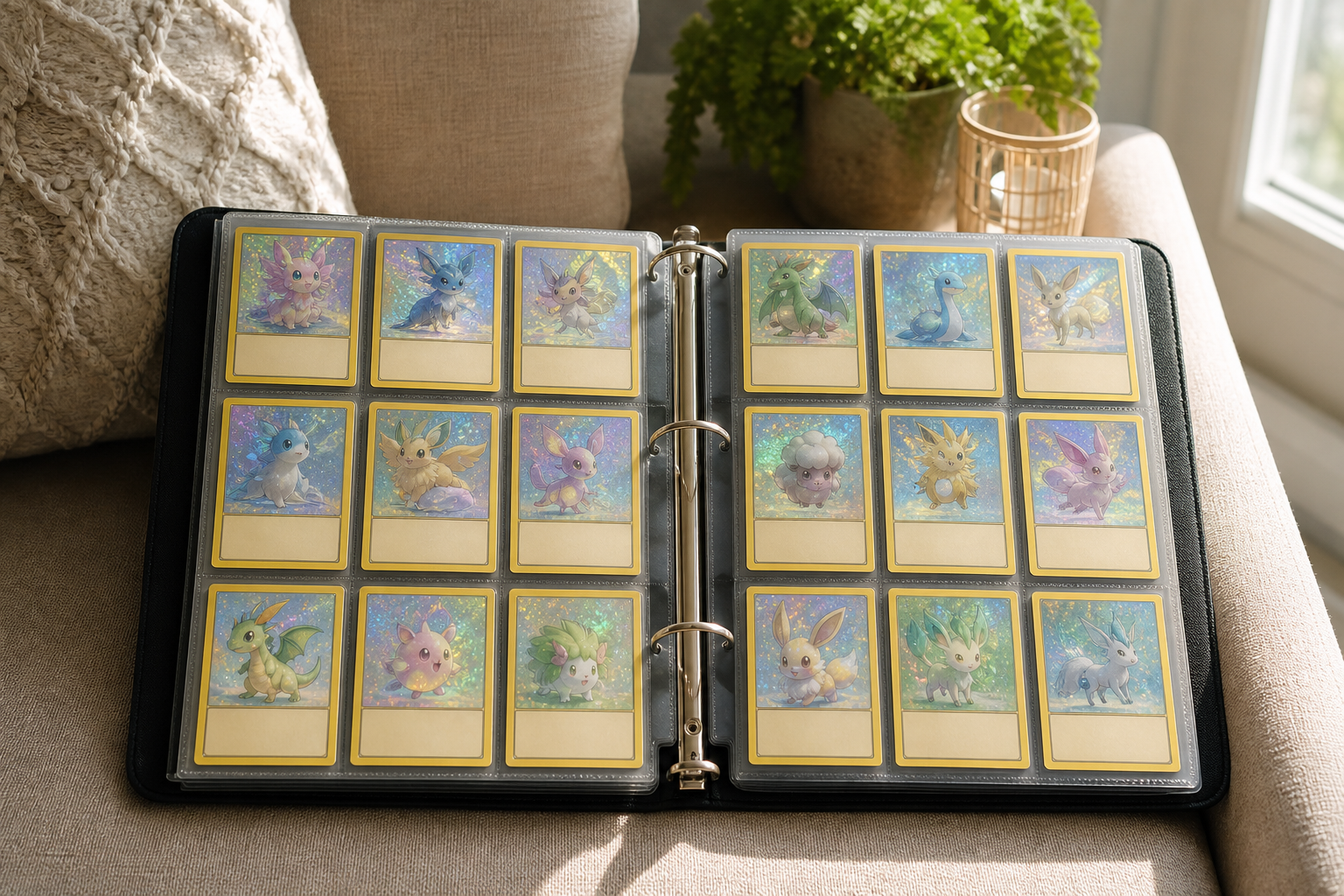
Set-building on Tilt Rips combines pack rips for variance, marketplace buys for specific slots, and free vaulting to hold progress until a binder goal is complete—raw and graded cards priced by live market data.
Completing a Pokémon set traditionally means ripping sealed product or buying singles until the checklist is full. On Tilt Rips, collectors can rip digital packs for hits, buy listed singles and slabs on the marketplace, vault pieces for free while hunting missing cards, and redeem and ship when the physical binder is ready to assemble.
This guide covers a practical set-building loop—not guaranteed completion on any timeline, but a strategy that matches how the platform’s four exits actually work.
Choose your set goal first
Set-building fails when the goal is vague. Pick one primary target:
- Master set (raw) — every card number in a set, raw condition band you define.
- Graded set — same checklist in PSA/CGC/BGS slabs at a grade floor (e.g. PSA 9+).
- Character / era collection — e.g. all Shining cards, promo Pikachu variants, or Gym-era holos.
- Display set — smaller curated subset for a showcase, not every common.
Each goal changes whether you rip, buy marketplace, or ship from vault most often.
The Tilt Rips set-building loop
- Rip packs on tiltrips.com/packs/ aligned with your budget.
- Vault set pieces for free while you hunt gaps.
- Buy missing slots on the marketplace.
- Sell duplicates via sell back or listing.
- Redeem and ship when the physical binder is ready to assemble.
Step 1 — Rip for variance
Open packs on tiltrips.com/packs/ aligned with your budget. Published value-range percentages describe outcome bands—not specific checklist cards. Rips supply surprise hits and trade bait; they rarely complete a master set alone.
Step 2 — Vault progress for free
Cards slotted for the set go to free vault with live market value and price history visible. No storage fees while you hunt gaps. See free vaulting guide.
Step 3 — Buy the missing piece
Search the marketplace for the exact card, grade, and price band. Faster than ripping for one common holo. Guide: best ways to buy graded Pokémon cards online.
Step 4 — Exit duplicates
Sell back at 90% of live market value for instant credit toward marketplace buys, or list if comps beat sell back. See best ways to sell duplicate Pokémon cards.
Step 5 — Redeem and assemble
When the vault holds enough of the set—or a shipped milestone worth the fee—redeem and ship. Shipping fees shown before confirm.
Raw set-building strategy
Best for: Modern and vintage master sets where raw condition tiers (NM/LP) are acceptable.
| Tactic | Why |
|---|---|
| Rip lower pack tiers for volume | Budget-friendly sessions; sell back mid hits |
| Vault holos and reverse holos | Free hold until checklist complete |
| Marketplace for single gaps | Cheaper than chasing one card through variance |
| Sell back bulk duplicates | Fund targeted marketplace purchases |
Vault vs ship (raw): Vault until you have critical mass to justify one shipment—or ship early if you sleeve locally and want tactile progress. Vault or ship guide
Graded set-building strategy
Best for: PSA 10 subsets, vintage gem runs, and display slabs with consistent grade floors.
| Tactic | Why |
|---|---|
| Rip upper tiers for graded chase | Many packs include pre-graded cards |
| Buy exact grade on marketplace | PSA 10 vs PSA 9 is not interchangeable |
| Vault by grade label | CGC and BGS sets need consistent grader rules |
| Track price history before listing gaps | Price movement guide |
Graded set builders should read PSA vs CGC vs BGS before mixing labels in one display.
High-value chase cards (Mewtwo ☆, Shining lines, promo Pikachu) live in vault inventory—see best chase cards on Tilt Rips for ceiling context, not checklist promises.
Budget discipline for set builders
- Set a monthly vault + rip budget separate from marketplace “finish the set” spend.
- Price the missing list before ripping emotionally—if ten marketplace buys finish faster than fifty rips, buy.
- Use sell back to recycle rips that do not advance the checklist.
- Watch Top Pulls for tier efficiency—not every tier matches every set goal. Top Pulls guide
Set-building vs flipping
Some collectors vault set pieces while flipping everything else same-session. Rules of thumb:
- Vault if the card advances a checklist or grade floor.
- Sell back if it does not and you need bankroll.
- List if it is a chase duplicate with comps above sell back.
First-week tips help separate set goals from lobby hype.
When marketplace beats ripping
Buy instead of rip when:
- You need one specific number or one grade.
- Ripping cost exceeds marketplace ask + fees with no entertainment value.
- You are finishing a set at 80%+ completion.
- Population or variant matters (reverse holo, stamp, language).
When ripping beats buying:
- You want variance entertainment and acceptable duplicates to sell.
- Upper-tier graded chase might exceed buying singles separately.
- You are early in a set and rips return many usable pieces at once.
Frequently asked questions
Can you complete a Pokémon set on Tilt Rips?
Collectors can progress sets by combining rips, marketplace purchases, and vault holds. Completing every slot depends on inventory availability and budget—not a guaranteed platform feature.
Should set builders vault or ship early?
Vault until shipping cost makes sense for batch size, or ship early if you assemble locally and want cards in-hand. Both raw and graded cards vault free with live pricing visible.
How do duplicates help set building?
Sell back duplicates for wallet credit to buy missing slots, or list on the marketplace if asks beat the 90% sell-back floor.
Does Tilt Rips have every card for my set?
Marketplace depth varies. Search the marketplace for specific needs; rips fill variance gaps when listings are thin.
Where do I start as a new set builder on Tilt Rips?
Pick a small set or character collection, read the pack guide, fund the wallet, and vault first progress before scaling tier. Support: [email protected].
Related Posts

Pokémon Card Gift Guide
Match the gift to their lane—or give sleeves and a want-list budget.

Play vs Collect: Pokémon TCG Players and Collectors
Two hobbies, one cardboard—keep deck cash and binder cash separate.

Pokémon Error Cards and Misprints
Not every quirk is a grail—document demand before you pay an error premium.

How to Ship Pokémon Cards Safely
Pack like the buyer grades corners—plus vault redeem when you want platform shipping.