

PSA vs CGC vs BGS for Pokémon Cards: Which Grader Wins?
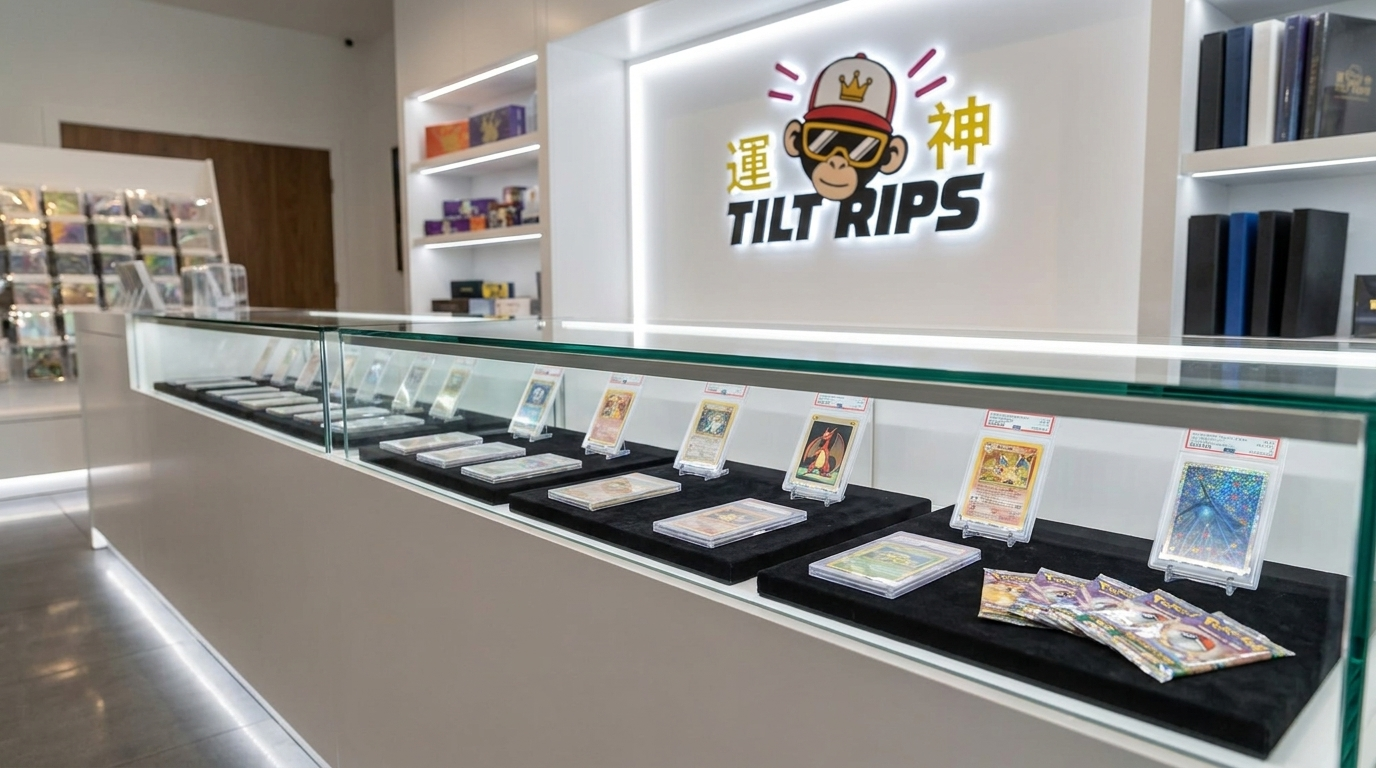
PSA, CGC, and BGS are the three grading companies collectors most often compare for Pokémon cards—PSA leads resale liquidity and gem premiums, CGC competes on modern value and subgrades, and BGS remains strong for vintage with its 9.5 “Black Label” ceiling culture.
On Tilt Rips, vaulted inventory includes all three—for example PSA 10 Mewtwo ☆ and Shining Mewtwo, CGC 10 Sabrina's Gengar, and BGS 9 Japanese Charizard in top inventory. Sell-back quotes and portfolio value use live market data per slab, not a flat multiplier by grader alone.
This guide compares the three for buying, selling, and ripping—not which company is “correct,” but which label fits the collector’s goal.
PSA (Professional Sports Authenticator)
Strengths
- Deepest buyer pool on eBay, auction houses, and peer marketplaces.
- PSA 10 is the default language for modern chase—population reports drive comps.
- Strong demand for vintage, Japanese promos, and modern ex/V at gem grade.
Tradeoffs
- Submission costs and turnaround vary by service level.
- PSA 10 populations on high-print modern can compress resale spreads.
- Crossover from other graders is not automatic—buyers often discount non-PSA until reholdered.
Best for: Maximum liquidity, mainstream comps, and collectors who plan to sell on broad marketplaces. See best places to sell PSA graded Pokémon cards.
On Tilt Rips: PSA slabs dominate high-value vault inventory and marketplace listings.
CGC (Certified Guaranty Company)
Strengths
- Competitive pricing and clear holder aesthetics on many modern cards.
- CGC 10 can present strong value on cards where PSA 10 premiums are extreme.
- Subgrade visibility (centering, surface, etc.) helps analytical buyers.
Tradeoffs
- Smaller absolute buyer pool than PSA on some vintage Pokémon—though growing.
- Cross-market comps sometimes require translation (“CGC 10 ≈ what PSA 9/10?” varies by card).
- Not every buyer filters CGC equally in apps and marketplaces.
Best for: Modern slabs, cost-conscious grading, and collectors who buy on eye appeal plus cert—not brand alone.
On Tilt Rips: CGC appears in top inventory (e.g. Sabrina's Gengar CGC 10, Mew ex CGC 10, Entei ☆ CGC 9). Live market data prices each cert on its own comps.
BGS (Beckett Grading Services)
Strengths
- BGS 9.5 and Black Label 10 culture rewards gem-quality vintage and high-end modern.
- Strong recognition among long-time hobbyists and high-end auction bidders.
- Subgrades help explain why a card landed at 9 vs 9.5.
Tradeoffs
- Fewer “default” filters than PSA on mass marketplaces.
- Black Label chase can make standard BGS 10 feel like a step below in marketing—even when the card is elite.
- Crossover economics (BGS → PSA) are a hobby debate, not a rule.
Best for: Vintage Japanese, trophy-style presentation, and collectors who already think in Beckett subgrades.
On Tilt Rips: BGS slabs in inventory include Japanese Charizard (BGS 9), Dark Espeon (BGS 9.5), and Tyranitar (BGS 7.5)—each priced by live market data, not a generic BGS discount.
Side-by-side comparison
| Factor | PSA | CGC | BGS |
|---|---|---|---|
| Mass-market liquidity | Strongest | Good; growing | Good for vintage niche |
| Modern chase default | PSA 10 | CGC 10 competitive | BGS 9.5 / Black Label |
| Subgrades | Limited in holder | Yes | Yes (core identity) |
| Typical buyer on Tilt Rips | Broad | Analytical / value | Vintage-focused |
| Pricing on platform | Live comps per cert | Live comps per cert | Live comps per cert |
Which grader should you target?
Rip or buy for fastest resale: PSA 10 on hyped modern usually clears fastest off-platform; on Tilt Rips, sell back at 90% of live market value works on any vaulted grader—the quote follows that cert’s market data.
Buy for personal collection: Pick the slab with the best eye appeal and cert you trust—not the label TikTok prefers this week.
Submit raw yourself: Compare submission price, turnaround, expected grade, and sold comps for that grader—not PSA comps alone if you plan to keep CGC or BGS.
Rip on Tilt Rips instead of submitting: Many packs include pre-graded cards; upper tiers skew graded chase. See graded vs raw packs and best ways to buy graded Pokémon cards online.
Grader mix in Tilt Rips top inventory
Current high-value inventory illustrates real-world diversity:
- PSA — majority (Mewtwo ☆, Shining lines, promo Pikachu, modern ex)
- CGC — Sabrina's Gengar, Mew ex, Entei ☆
- BGS — Japanese Charizard, Dark Espeon, Tyranitar
See 50 most expensive Pokémon cards on Tilt Rips for the full ranked mix.
Frequently asked questions
Is PSA or CGC better for Pokémon?
PSA generally wins on mass-market liquidity and PSA 10 language. CGC is often competitive on modern value and subgrade transparency. “Better” depends on whether the goal is fastest sale, lowest grading cost, or display preference.
Does Tilt Rips only vault PSA cards?
No. Tilt Rips vaults raw and graded cards from PSA, CGC, BGS, and other recognized graders. Pricing uses live market data per cert.
Is BGS 9.5 equal to PSA 10?
Sometimes in price, often not—card-by-card. Use sold comps for the exact cert; on Tilt Rips, portfolio value reflects live market data for that slab.
Should I regrade before listing on Tilt Rips?
Usually unnecessary for selling on-platform—buyers see cert, grade, and live pricing in-app. Off-platform PSA bias may still matter if you plan to export the slab later.
Where can I learn post-rip exits by grade?
Read How Tilt Rips works and best ways to sell Pokémon cards. Support: [email protected].
Related Posts

Pokémon Card Gift Guide
Match the gift to their lane—or give sleeves and a want-list budget.

Play vs Collect: Pokémon TCG Players and Collectors
Two hobbies, one cardboard—keep deck cash and binder cash separate.

Pokémon Error Cards and Misprints
Not every quirk is a grail—document demand before you pay an error premium.

How to Ship Pokémon Cards Safely
Pack like the buyer grades corners—plus vault redeem when you want platform shipping.