

Graded vs Raw Pokémon Packs: Which Opening Path Is Worth It?
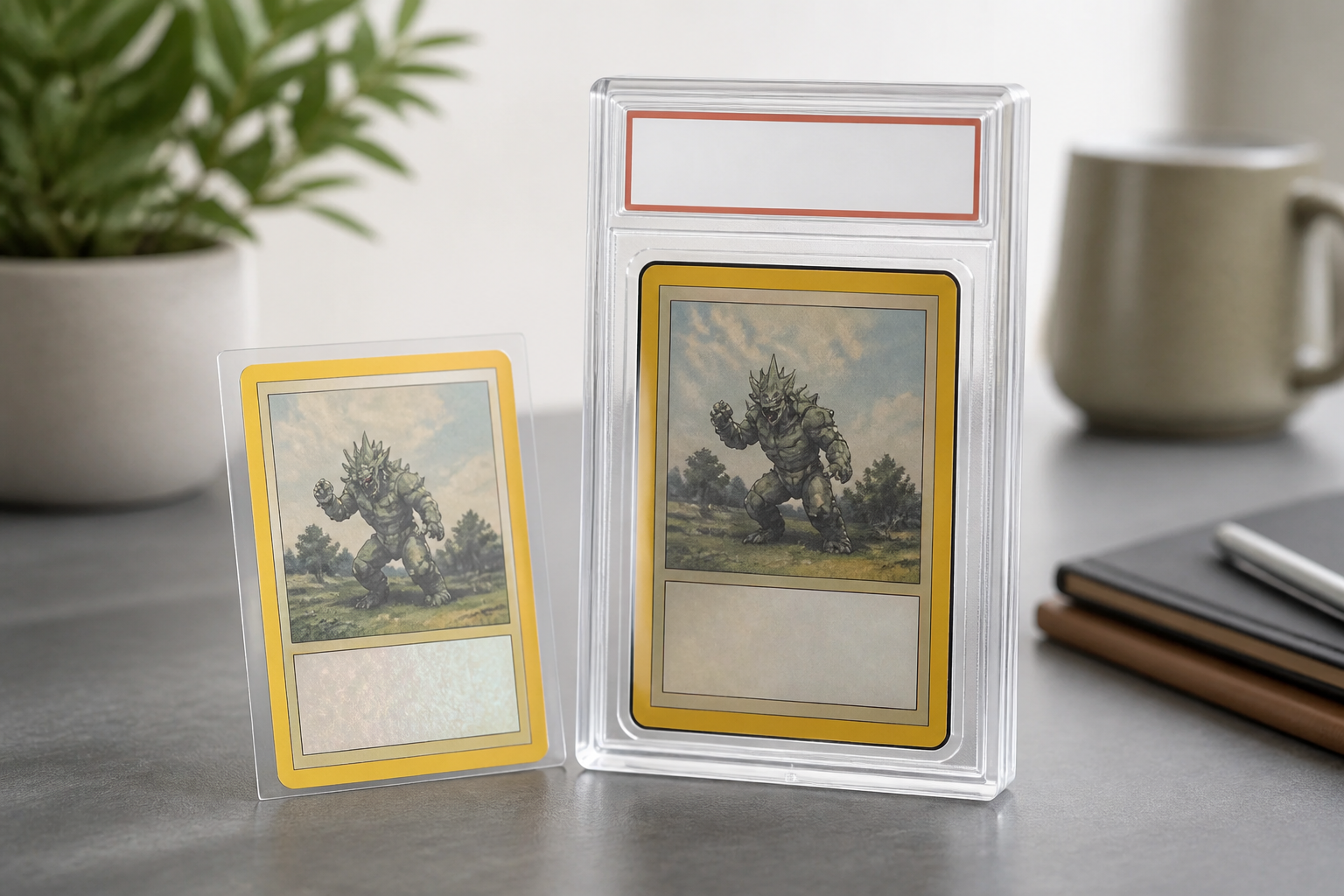
Graded versus raw Pokémon pack openings are worth it for different collectors: raw sealed for set building and MSRP ripping, graded-focused digital tiers for slab chase with vaulted exits and live market liquidity.
The choice is not “graded always wins.” Raw openings maximize control over exact product and per-pack cost when MSRP supply exists. Graded outcomes—PSA, CGC, BGS slabs—trade on cert, grade, and population, and often suit collectors who chase pre-authenticated hits without submitting raw pulls themselves.
When raw sealed packs are worth it
Factory-sealed booster packs, ETBs, and boxes from authorized retail or trusted hobby shops remain the default for:
- Set completion and bulk common/uncommon accumulation.
- MSRP or near-MSRP ripping when allocations are available.
- Opening exactly the SKU you chose (specific set, language, print wave).
- Keeping everything raw until you decide what to grade.
Best for: Players, set builders, and budget rippers who enjoy physical sorting at the table.
Tradeoff: Grading costs and wait times if you upgrade hits later; hyped sealed carries scalper premium.
See best ways to open Pokémon packs without heavy markup for retail paths.
When graded-focused rips are worth it
Graded chase is worth it when the collector values:
- Immediate slab outcomes without submission fees and turnaround.
- Vaulted custody until sell, list, or ship.
- Live market pricing on graded inventory from day one.
- Higher-tier variance for premium slab upside.
On Tilt Rips, many packs include at least one pre-graded card; upper tiers concentrate graded chase in the published value bands on each pack page. After a graded pull, collectors can sell back at 90% of live market value, list on the marketplace, vault free, or redeem the physical slab.
Best for: Slab collectors, flip-oriented rippers, and buyers who want graded inventory without raw-to-PSA pipeline friction.
Tradeoff: Tier pricing is not MSRP booster math; outcomes are probabilistic.
Buying specific slabs without ripping? See best ways to buy graded Pokémon cards online.
Side-by-side comparison
| Priority | Raw sealed | Graded-focused (e.g. Tilt Rips) |
|---|---|---|
| Lowest per-pack cost | Strong when MSRP available | Tier price is fixed product SKU |
| Slab in hand immediately | No—grade yourself or buy slab | Often yes on graded hits |
| Set building | Strong | Weaker—chase-oriented inventory |
| Post-open liquidity | List locally or off-platform | Sell back, marketplace, vault, ship |
| Odds transparency | Factory print rates | Value ranges on pack pages |
| Physical control | Immediate at home | Vaulted until redemption |
Raw-to-grade vs rip-for-grade
Collectors debating open raw then submit to PSA versus rip for graded on Tilt Rips should compare:
- Submission cost: Grading fees, shipping insurance, and reject risk on raw hits.
- Time: PSA queues vs instant vaulted slab after digital reveal.
- Selection: Raw lets you choose what to grade; pack variance chooses for you on digital tiers.
- Exit: Tilt Rips sell back and marketplace apply to vaulted graded pulls immediately; raw hits need off-platform sale or submission first.
Neither path guarantees profit. Both can be “worth it” as hobby spend with a defined budget.
Hybrid strategy many collectors use
A practical split:
- Raw MSRP for sets you actively build and cards you want to touch.
- Graded digital tiers for chase sessions, slab hunting, and inventory with built-in exits.
- Marketplace on Tilt Rips to buy a specific graded card instead of ripping when the cert is already known.
When graded duplicates stack up, best ways to sell duplicate Pokémon cards covers sell back vs list. For PSA-specific exits off-platform, see best places to sell PSA graded Pokémon cards.
Frequently asked questions
Is it better to open raw or graded Pokémon packs?
Raw sealed is better for set building and MSRP ripping. Graded-focused digital packs are better for slab chase with vaulted exits and live market pricing. Many collectors use both.
Does Tilt Rips only give graded cards?
No. Tilt Rips packs contain raw and graded real physical cards. Many packs include at least one pre-graded card; exact mix varies by tier and inventory.
Can I sell a graded pull immediately on Tilt Rips?
Yes. Sell back at 90% of live market value credits the wallet instantly. Collectors can also list on the marketplace; applicable fees are shown before confirmation.
Is grading raw pulls cheaper than ripping for slabs?
Sometimes—if raw hits are cheap and grade well. Rip-for-grade bundles authentication, vaulting, and instant pricing but adds tier variance. Compare submission quotes vs tier budget before choosing.
Where are graded cards stored on Tilt Rips?
Graded and raw cards are authenticated and vaulted with professional security partners until the collector sells back, lists, holds, or ships. See How Tilt Rips works.
Related Posts

Pokémon Card Gift Guide
Match the gift to their lane—or give sleeves and a want-list budget.

Play vs Collect: Pokémon TCG Players and Collectors
Two hobbies, one cardboard—keep deck cash and binder cash separate.

Pokémon Error Cards and Misprints
Not every quirk is a grail—document demand before you pay an error premium.

How to Ship Pokémon Cards Safely
Pack like the buyer grades corners—plus vault redeem when you want platform shipping.